
150 +
Meet Our Current Field Staff


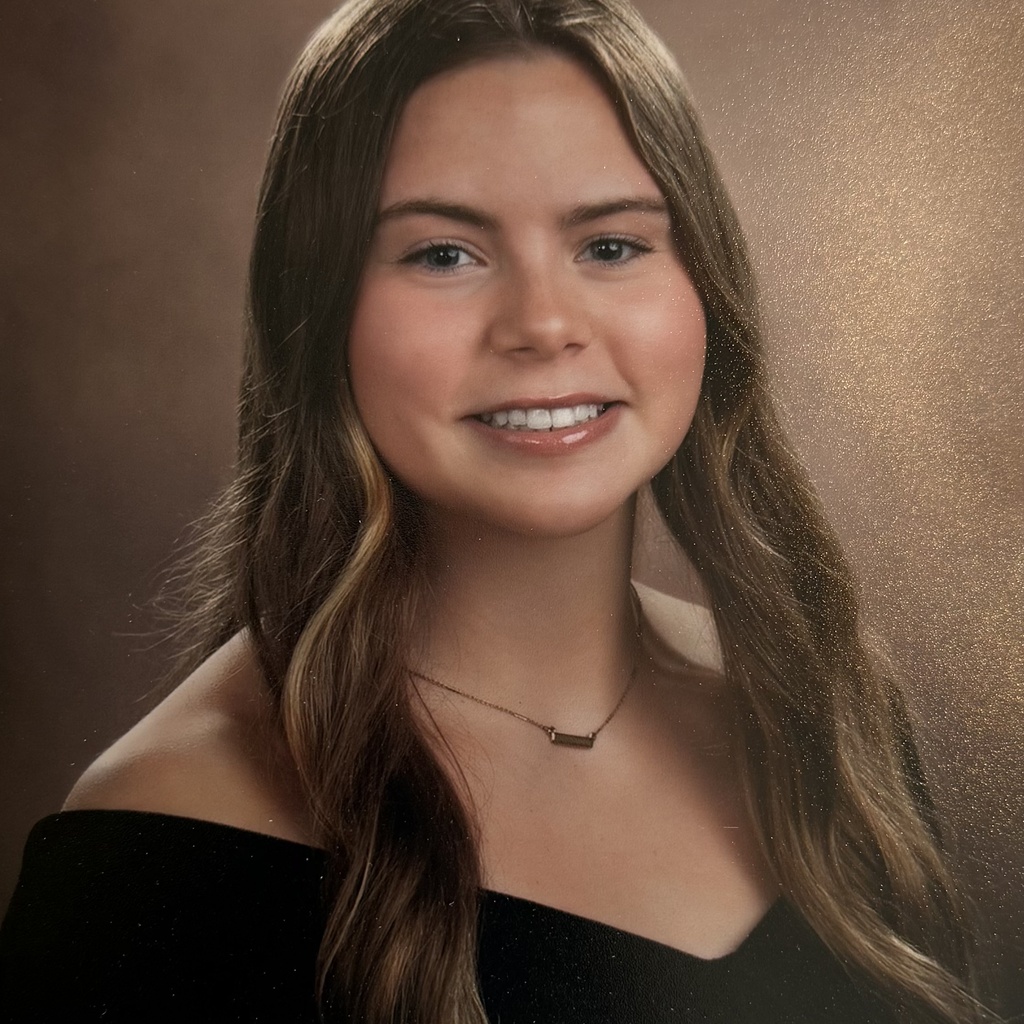
Avery Forde


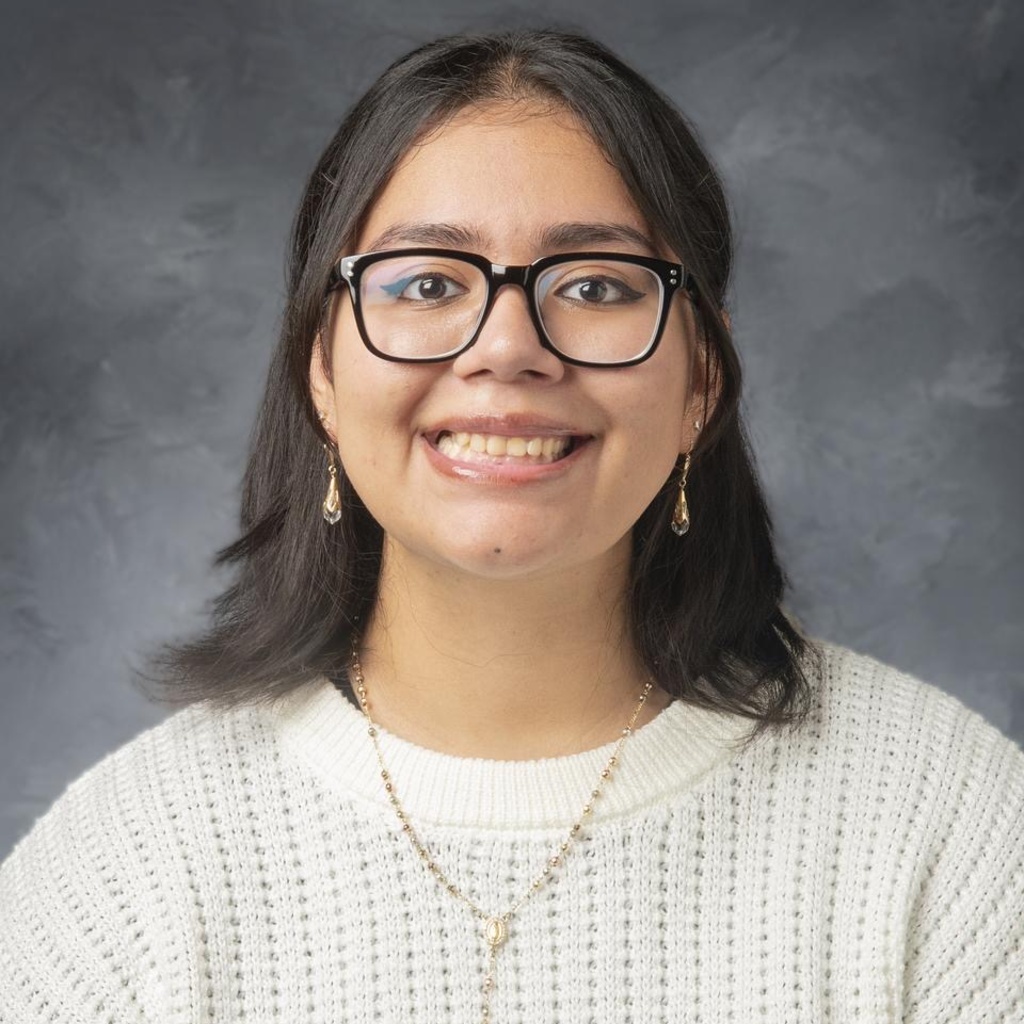

Aldair Solis Sanchez

Gain Experience in Data Collection

Principles for Clarity and Objectivity
Learn how surveys are designed to ensure that questions are clear, unbiased, and effective.

Piloting, Testing, Revising, and Conducting
Pilot, test, and revise survey instruments and conduct surveys via telephone, mail, and the web.

Data Entry and Integrity
Perform data entry and conduct quality checks.

From Conversation to Data
Transcribe interviews from research participants and learn how to code them for analysis.
Receive Research Training


Eligibility & Employment Benefits
Eligibility
To be eligible, students must be able to work on-site at the center at 605 E Jefferson St., Iowa City, IA. We're looking for self-motivated students who can bring reliability, attention to detail, clear communication, customer service skills, and professionalism to the team.
Earn Money
Student employees at CSSI earn a competitive wage for their work while gaining valuable research experience.
Flexible Schedules
All shifts are based on the student's availability and class schedule.
Interesting Studies & Participants
CSSI conducts a wide range of surveys on topics in healthcare, safety, politics, wellness, and more. Our staff engages with people from all over the United States, gathering important data for projects across disciplines.
Enhance Your Resume
In addition to research experience and training, student employees also gain soft skills such as time management, relationship-building with supervisors and peers, and overall professional work experience.
OUR Research Partnerships
CSSI is proud to support social science research projects funded through two Office of Undergraduate Research (OUR) research programs: Independent Creative Research by Undergraduate (ICRU) Fellowships and Collaborative Research Projects.
Since 2010, ICRU has provided funding to over 2,500 students, amounting to over $5.8 million, to promote undergraduate engagement in research and creative projects with faculty or professional and scientific staff mentors. Each spring, students and their mentors apply for an ICRU Fellowship for the academic year or the summer. CSSI is then given an opportunity to support fellows engaging in social science research.
Launched in 2025, the Collaborative Research Projects program allows students to work together in small groups on a creative or research project under the direction of a faculty mentor. Through CSSI's co-sponsorship, these collaborative research groups have additional access to CSSI research supports and are able to host team meetings in our newly renovated student lab.
Take a look at some of our supported projects through OUR!
Luke M. Meacham, Political Science
Project Description
The Disasters, Migration, and Violence (DMV) Lab (Mitchell & Pizzi) is creating a new dataset on government responses to disasters for all geophysical, meteorological, hydrological, and climatological disasters registered in the EM-DAT International Disasters Dataset for each country (1900-present). We examine government policy responses to natural disasters to better understand which types of policies increase political violence risks including 1) relocation of affected individuals, 2) restrictions on movement, 3) reconstruction of damaged areas, and 4) regulations of third-party disaster relief. We expect that political violence is more likely when governments restrict movements of disaster affected populations, restrict third party actor aid efforts, give aid unequally to politically favored areas, and rely on decentralized disaster management strategies. To date, the project has produced research papers on disaster response patterns in Peru (1900-2020), on the relationship between disaster responses and armed conflicts in Peru at the administrative 2 level (1989-2020), and text analysis of 12,268 disaster-related newspaper articles in Turkey between the earthquake and presidential election in 2024. Members of the lab are currently working on a new project on how disaster response differs near contested interstate borders vs. uncontested interstate borders.
Student Statement
“As a political science major and history minor at the University of Iowa, I have long had an interest in studying how both these subjects interconnect on a global stage. Learning about cases of disasters and how governments and NGOs respond to them will help further my understanding of both the history and politics of environmental disasters. My studies in Political Science will help me understand the implications of government responses on the potential onset of violence or other negative consequences. Being able to collect data on Iran and Iraq, two rival states that are threatened by environmental changes, will expand my knowledge about conflicts in the Middle East.
In the spring 2023 semester, I was able to take Professor Mitchell’s Civil Wars class. This course has given me a broader understanding of not only the history of civil conflicts around the globe, but also data collection related to these conflicts and how to apply it in a scholarly manner. Throughout my time in the course, I am grateful to have learned from Professor Mitchell’s expertise on the course material. I am excited to work alongside her in the DMV Lab, as this opportunity will allow me to further expand my horizons concerning governmental responses to disasters and other issues.”
Sophia E. Heller, Political Science
Project Description
Sophia will work with Professor Pizzi to collect information on disaster response in Myanmar. The focus will be on understanding the variation in policies after natural disasters and how disaster responses differ depending on the region of the country. Myanmar regularly suffer disasters, conflict, and mass displacements and responds in a variety of ways.
Student Statement
“I am interested in working with Professor Pizzi on natural disasters in Myanmar because I find Myanmar's politics and human rights fulfillment compelling especially within the context of natural disasters. I also find it particularly captivating how natural disasters may lead to or intensify conflict. I chose to work with Professor Pizzi because Professor Pizzi is a scholar in the areas of comparative environmental and international politics and I am also interested in these areas as an academic. Professor Pizzi is also currently my Comparative Environmental Politics Professor and I wish to continue to learn from her under this project.”
Will Hand, Informatics
Project Description
For this project, Hand will be working with the Center for Publics, Platforms & Personalization (CP3), directed by Dr. Brian Ekdale, to analyze data for large grant-funded study of the relationship between social media personalization and radicalization (recipient of a 3-year $1M grant from the U.S. Department of Defense Minerva Research Initiative: Algorithmic Personalization and Online Radicalization: A Mixed Methods Approach). This study includes a two-wave longitudinal survey, behavioral data collection, and in-depth interviews focusing on political attitudes, views about technology, and intentions to engage in activist/radical behaviors. Specifically, Hand will be analyzing interview data with 76 social media users about how they understand social media personalization, their use of social media for political engagement, and their vulnerability to radicalization. The intended outcome of this work would be to produce a conference manuscript and possibly a peer-reviewed journal submission.
Student Statement
"I was intrigued by Dr. Ekdale's research on the relationship between political extremism and social media behavior after reading an Iowa Center for Social Science Innovation investigator spotlight. His research investigates how social media algorithms deliver tailored content they believe users will enjoy and how exposure to this tailored content affects political views. This project captured my interest because I have noticed that developing extreme views from social media is not limited to young people; I have seen this happen with my grandparents. After reading one of Dr. Ekdale's papers exploring how social media amplifies users' personal biases and interests more than non-personalized media like newspapers, it made sense how extremism can develop in people of all ages. After meeting Dr. Ekdale, we determined that I could use an OUR fellowship to analyze interview data gathered from his survey of social media users to explore the relationship between social media personalization and radicalization. As an avid user of Reddit, Instagram, and X, I have seen many examples of confirmation bias from posts of users who have been brainwashed by only reading information that confirms their beliefs. As I become more familiar with this dataset, I aim to develop data analysis skills relevant to both my Informatics degree and my Social Science Analytics certificate. CS:1110 Introduction to Computer Science equipped me with basic algorithms, data analysis, and organizational methods essential for excelling in this social computing-focused project, and I am currently learning fundamental statistical techniques in STAT:1020 Elementary Statistics and Inference. My research tasks will be well-suited to my current level of knowledge, but I will also complete training in human subjects protection before I begin. This experience aligns with my aspirations to harness and analyze data to answer questions and begin a career in research and data analytics."
Brooke Paasch, Political Science
Project Description
This project will examine what influences people's attitudes towards refugees in their country. As the number of refugees continues to grow globally, host countries are facing public scrutiny and the rise of political messaging that questions the welcoming of refugees and policies aimed at supporting them. This project seeks to explain what factors drive individual attitudes towards refugees and refugee policies. Existing research has looked at the political ideology of an individual, their personality, and a few other factors. Building on this research, we plan to develop an argument about the role that an individual's perception of the world, their economic situation, and the types of refugee policy a country has on their perception of refugees. We plan to use a variety of survey data from countries that host a high number of refugees, including Turkey, Germany, Pakistan, Bangladesh, Poland, and Jordan. Survey data on perceptions of refugees and many of the factors we plan to look at exist in surveys in these countries. Depending on available funding, we also hope to do a survey experiment in Turkey, where Professor Lai has contacts to more directly test a few of our causal arguments."
Student Statement
"I chose to work with Professor Lai because, since his first-year seminar course, he has significantly helped me develop both academically and professionally, offering countless opportunities and opening many doors for me. His support has been invaluable, and I greatly appreciate his mentorship. He ensures that I have the skills necessary for success and possesses extensive expertise, allowing him to provide informative feedback and direction."
Bailey Vergara, Screenwriting, Journalism, and Mass Communication
Project Description
Within the past decade, AI has cemented itself as a potential game changer within the realm of modern journalism. Media professionals have expressed both hope and concern towards potential AI integration in the newsroom. However, the existing research on perceptions of AI news mainly centers on professional journalists. Hence, we have found a major gap in the research: there is very little focus on the perspectives of journalism students. These are the journalists of the future, whose views on AI journalism will inevitably shape how it is seen and used in years to come. This study aims to be among the first to examine the attitudes and beliefs of college journalism students in regards to AI's place in the newsroom. We intend to interview 20 student journalists at University of Iowa who gain direct journalistic experience through forums like the Daily Iowan, DITV, and KRUI on their opinions and usage of AI. We will also conduct an online Qualtrics survey to students at the University of Iowa School of Journalism and Mass Communication (N = 300) in order to gauge a broader view of student attitudes toward AI journalism.
Student Statement
"Since my first semester at Iowa, I have been fascinated with research concerning perspectives on AI journalism. Through my Honors First-Year Seminar, Futurology, I was able to read literature on the subject, write analytical papers, and even conduct two interviews with professionals University of Iowa Instructor Sarah Witmer and KCRG journalist Abigail Kurten on their beliefs about the future of AI news. So, when I realized that Professor Zhang has conducted research in the field of AI journalism, I reached out to her and we began collaboration on this project. I believe that, together, we have found an area of study on this subject that is both easily accessible and pertinent to existing literature. I am curious to see what my classmates and peers think about future use of AI in their chosen field, and I know that their opinions will come to shape the career landscape that I will soon enter into."
Divija Sharma, Psychological and Brain Sciences
Project Description
Decision makers often establish an early preference after being exposed to preliminary information about their choices and this early preference can affect how subsequent information about choice options is processed. Importantly, such information distortion can have a substantial influence on people's final judgments and decisions. This project would build upon the student's Honor's thesis research on information distortion--which has been well documented in decision-making contexts using textual stimuli--also extends to prediction contexts in which the key stimuli is primarily visual. The initial study of the thesis work involved a paradigm in which people predicted winners of an art competition, and the new work will involve development of a paradigm in which people predict employment outcomes. Participants will learn that their task is to view the portfolios of two applicants for a prestigious job and eventually make predictions about which applicant was awarded the job. By revealing the portfolio contents and stages and asking for a series of evaluations and predictions, the research team will be able to measure the degree to which and early leaning, set up in an initial stage, biases information processing and ultimately final predictions in later stages.
Student Statement
“This project greatly captures my interest as it builds upon my Honors Thesis work and explores a relatively new concept in the field of decision sciences in an applied context. I would love to learn from my research experience this spring and improve upon it in the summer. I always wanted my research to have a meaningful connect with the real world and working on these new paradigms motivates me to become an impactful researcher.
Moreover, this project is also very important to me due to my mentor Dr. Windschitl. I have been working in his lab as a research assistant for 4 semesters now and have grown a lot as a researcher. My research interests align with the lab projects very well, ranging from desirability bias to decision aids. Dr. Windschitl’s informed guidance, astute insights, and diligent work ethic along with the way he fosters a supportive environment for his students has helped me find my academic belonging.
This project would help me continue my in-depth involvement in lab work and pursue another independent study that I am passionate about. Without classes in session, I would be able to focus on research more thoroughly and chase arduous goals like a journal publication. Ultimately, this project would also enhance my research experiences for a graduate school application as my next career goal is to pursue a PhD in Decision Sciences.”
Olivia J. Tobin, Linguistics
Project Description
Individuals who use more than one language (bilinguals) switch between their languages effortlessly only when they live in environments where switching happens regularly (Beatty-Martinez et al., 2017; Tiv, Kutlu et al., 2022). While most studies on this topic have explored spoken language bilingualism, little is known regarding bimodal bilingualism. Sign languages are fully developed language systems that use gestures and body movements. Therefore, sign languages and spoken languages represent two different modalities in the brain: a sound-based system and a sign-based system. The intriguing question is whether individuals who use both modalities will depend on the same or different language mechanisms in the brain. In this study, we will test participants who speak American English and American Sign Language. Participants' social network structure will be measured with a social network survey designed by PI Dr. Kutlu (Kutlu et al., 2021; 2022a; 2022b). We will then couple the network tools with eye-tracking equipment, which allows us to record eye movements which are indicative of how individuals process language. All items will include spoken and sign language mixed together. We hypothesize that bimodal bilinguals use shared cognitive resources when processing bimodal language and expect this to be modulated by their social network structure.
Student Statement
“My research interest lies in the intersection of language acquisition and processing. After taking my first linguistics course, I became interested in applying my background in science and mathematics to the study of language. This brought me to Dr. Kutlu’s VoiceLab, where I have been a research assistant since the Fall of 2023. Dr. Kutlu’s research on the psycholinguistics of bilingualism appealed to me in particular due to his experimental and statistical foci. In the VoiceLab, I have applied my theoretical math background to psycholinguistic data processing.
With further exploration into the field of linguistics, an exploration enthusiastically supported and directed by Dr. Kutlu, my primary research interests have converged on the study of signed languages. This is a relatively new and underexplored area of research, and this funding would give me the opportunity to be on the cutting edge of language science as an undergraduate at the University of Iowa. Through this project, I want to shed light on an aspect of human language that has been historically neglected and discredited. This is evident even in studies where bimodal bilingualism has been the topic of interest. I aim to study how the mind represents spoken and sign languages using eye-tracking and network science tools.
Designing and executing my own study, performing real and relevant scientific research, would provide me with invaluable knowledge and skills for my goals of studying experimental linguistics in graduate school and going on to a career as a linguist. Through this project, I would gain hands-on experience using laboratory equipment (including eye-tracking software), analyzing data with industry-standard programs, and writing, publishing, and presenting my research to the larger scientific community.”
Ready to get involved?
Reach out to our team to express interest in student employment opportunities and possible research experiences!