
The Center for Social Science Innovation (CSSI)’s Researcher-in-Residence (RiR) program gave three University of Iowa (UI) scholars the structure and supports they needed to get their research to the next stage over the summer.
“I am impressed by the efforts of this year’s scholars, who have taken leaps to advance the corners of their fields, which include AI storytelling in journalism, the viability of fare-free transit, and the burnout of educators.” says Mark Berg, CSSI director. “We were excited to build upon the success of the past Researcher-in-Residence programs, and once more provide faculty with useful resources and guidance.”
Program participants received valuable supports such as:
quiet, dedicated office workspaces,
funding,
CSSI staff support,
weekly check-ins, and
workshops.
Here’s how the researchers say the experience benefited their scholarly projects.
Bogdan Kapatsila: Analyzed impact of free transit

Bogdan Kapatsila, assistant professor in the School of Planning and Public Affairs in the Graduate College, spent the program investigating the impacts of Iowa City Transit’s fare-free program, which began piloting in August 2023. Over the past two years, as the pilot unfolded, the other two local transit agencies’ fares remained unchanged: the university’s CAMBUS continued to operate free to the public, and Coralville Transit continued to charge $1 per ride.
Kapatsila analyzed three metrics—ridership, rider satisfaction, and safety—for all three agencies before and after Iowa City Transit made the switch. He found that the pilot program had a positive effect on Iowa City Transit ridership, increasing it by 37% compared to the Coralville Transit, while no such effect was observed for CAMBUS. At the same time, no changes to rider satisfaction or perceived safety were found.
Kapatsila believes these results can speak to the local productiveness and utility of free transit.
“Transit supports economic development, allowing people who can’t afford a car to get to work,” he explains. “Additionally, transit supports social networks and social mobility. Anecdotally, city police and staff have reported seeing kids in places where they hadn’t seen them before [Iowa City Transit went fare free]. They can now get involved in extracurriculars or find jobs.”
Next, Kapatsila will dive into the rich stories of those riders and present his overall findings to the Iowa City City Council. Kapatsila is grateful RiR provided him with the quiet, secluded headspace to think during the project. In fact, he’s staying in his office until the bells of the fall semester begin to ring.
Sang Jung Kim: Gets generative AI in journalism project off the ground
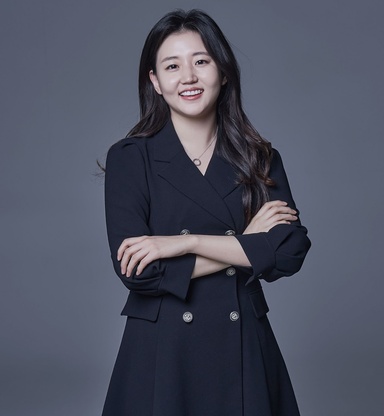
Sang Jung Kim, assistant professor in the School of Journalism and Mass Communication in the College of Liberal Arts and Sciences, began exploring how local journalists feel about the use of generative AI tools in visual storytelling.
Kim plans to conduct interviews with local journalists about their experiences and perceptions of AI. She points out that local journalists have a unique relationship with their consumers, as the close community and connection forges trust, which some are wary AI could disrupt.
Kim’s project was just getting its footing at the start of RiR, and she credits CSSI for laying a strong foundation.
“My project was in the initial stages, and CSSI and associate director Ethan Rogers helped me really build the structure so I can do interviews when the semester starts,” she shares.
Once the interviews are complete, Kim will use RiR’s funding and CSSI’s multimethodology research services to transcribe the interviews. Throughout RiR, Kim also made use of other CSSI resources, including the Write on Target writers’ circle and the weekly check-in meetings.
“This program really holds you accountable in summer when everyone feels like ‘I need to do this and that.’ That was the best part,” she reflects.
Ashley Rila: Wrote a manuscript about paraprofessional burnout
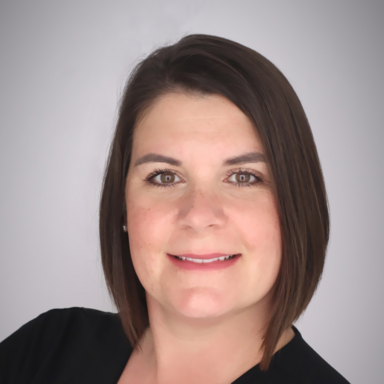
Ashley Rila, clinical assistant professor in the Department of Teaching and Learning in the College of Education, spent the summer examining the burnout of paraprofessionals, individuals who support the individualized academic and behavioral needs of students in schools.
Prior to RiR, Rila collected survey and interview data about paraprofessionals’ burnout experiences. During RiR, Rila explored how the data meshed together, drafting a full manuscript of her findings.
Her results suggest some paraprofessionals feel burnout – that is, emotionally exhausted and devoid of personal accomplishment – while others feel rejuvenated and invested. Regardless of where they landed on the burnout spectrum, many also reported feeling undertrained.
“If paraprofessionals are burnt out, they are less likely to show up to work, less likely to implement things with fidelity, and less likely to have passions. If paraprofessionals are working with the hardest kids, and they are burnt out – or undertrained, that has implications for student outcomes,” Rila explains.
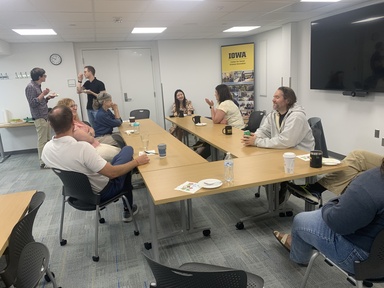
As RiR progressed, Rila appreciated the sense of community the program facilitated.
“I am not necessarily a person who finds community very easily in new spaces, but I really like that we’ve been invited to almost anything that’s been around, especially the community breakfasts,” she says. “It’s just so welcoming and it makes me feel a lot more comfortable when I am invited and able to share my experiences.”
Ultimately, as Rila connected with scholars in other disciplines throughout RiR, the way she thought about her work shifted.
“It was interesting to think about as a scholar how you can view your work from another lens,” Rila says. “The interdisciplinary nature of the workshops and the scholars here is a value.”
Applications for next summer’s Researcher-in-Residence program will open in winter 2026. For more information about other research incubation programs, click here.
To receive emails about CSSI news and opportunities in support of social science research across the University of Iowa campus, within our communities, and beyond, subscribe here.